

 LinkedIn
A screenshot of ChatGPT naming your brand is not a visibility metric. I’d treat it the way I treat one interesting line in a search terms report: worth investigating, not worth putting on an executive scorecard.
How can my business measure brand visibility across ChatGPT, Gemini and Google AI Overviews?
Stop combining mentions, links, and recommendations into one blended “visibility score.” In paid search, I wouldn’t merge impression share, click-through rate, and conversion rate into a single index. Each number points to a different failure. Measuring brand visibility across ChatGPT, Gemini and AI Overviews calls for the same separation:
- Mention rate: Does your brand name appear in the answer?
- Citation rate: Does the answer link to your domain as a source?
- Recommendation rate: Does the engine position you as a solution to the buyer’s specific problem?
As practitioners in measurement discussions point out, a brand can earn citations on broad informational questions and still disappear when a buyer asks for a recommendation. Blend the two and you can’t tell whether you’re helping educate the market or appearing when someone is ready to choose.
Then you have to accept the uncomfortable part: one answer is not a measurement. Identical prompts can produce different answers across sessions. Paired-run testing found that the same model, queried minutes apart, repeated only about 40% of its cited domains. You can treat each appearance as a Bernoulli trial: estimating a rate for one prompt and model to within ±10 percentage points at 95% confidence takes roughly 97 runs; ±5 points takes about 385. Seven daily screenshots are not a trendline. They’re seven screenshots.
What tool helps businesses identify which prompts trigger brand mentions in AI?
Before you open your checkbook, open your sales notes. Dedicated monitors can run scheduled queries and record whether your brand appears. Entry-level trackers such as Otterly start around $29 a month with key engines gated; Peec AI runs about $95 a month, and enterprise suites such as Profound start north of $499. Traditional platforms such as Semrush also offer generative tracking modules.
But a prompt tracker cannot give you verified AI prompt search volume. OpenAI, Anthropic, and Google do not publish an AI query planner. A platform’s “top prompts” may be useful suggestions, but they may also be synthetic questions no buyer would ask. The tool can tell you what happened when it tested a prompt. It cannot, on that basis alone, tell you how many buyers typed it.
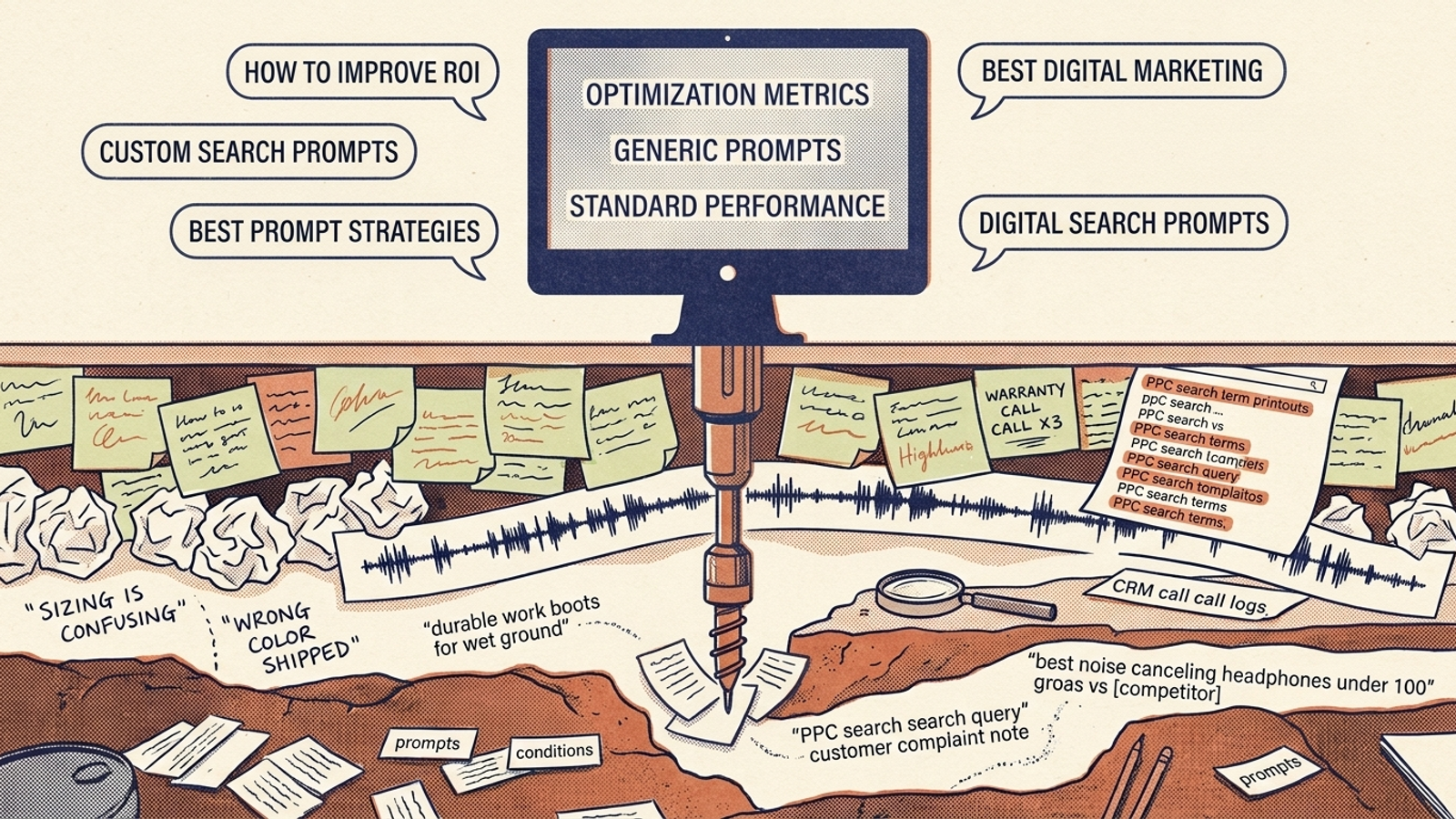
When I ran search campaigns by hand, I learned how quickly budget disappears when you bid on what a client assumes buyers search for instead of reading the search terms report. I’d build an AI prompt set from three places before paying for one generated by a vendor:
- Converting paid-search terms. Filter the Google Ads search terms report for queries with two or more conversions and an average order value or pipeline value above your median. Look closely at full-sentence queries and comparison qualifiers; they reveal the problems buyers put into words.
- Sales calls and CRM lost reasons. Search Gong, Chorus, or HubSpot notes for “we are also looking at.” Competitors named there belong in comparison prompts such as
Compare [Your Brand] vs [Competitor] for mid-market teams. - Reddit and community objections. Prospects ask blunt questions when they evaluate a category anonymously. “Cheapest alternative that handles multi-currency” is more useful testing material than a polished category slogan.
Once you have those prompts, decide whether a dedicated tracker is worth paying for. A dashboard can catch a drop across hundreds of SKU variations. It cannot write documentation, repair a comparison page, or change what external sources say about you. A mention report diagnoses the problem; it does not fix it.
How can a small business automate brand monitoring in AI search in-house?
The tempting version takes an afternoon: write a Python script, ping the OpenAI API on a daily cron job, and send the answers to a Google Sheet. The trap is treating that sheet as a record of what buyers saw. A raw model call without live browsing is not a substitute for a live search experience. Setting API temperature to 0.0 may make the output look tidier, but it does not add the retrieval layer you left out. As technical breakdowns of generative tracking explain, you need to account for live retrieval when you’re trying to monitor search visibility, rather than answers drawn from model weights alone.
The other shortcut is referral traffic. Teams create Google Analytics 4 channel groupings for chatgpt.com, android-app://com.openai.chatgpt, and perplexity.ai, then read flat referrals as zero AI visibility. That confuses being seen with being clicked. Click-through benchmarks put citation-link CTR inside ChatGPT at roughly 1.3%, versus about 29.2% for a position-one organic Google result. A buyer can read an answer, remember your name, and visit later without clicking its citation. GA4 referrals are a useful signal, not a visibility count.
For a zero-budget starting point, I’d use a structured manual sample rather than a script that tests the wrong experience. Our 30-day manual AI visibility playbook lays out a two-hours-a-week routine for testing 30 core buyer prompts across three engines in clean incognito browser sessions. Record the prompt, engine, date, mention, citation, and recommendation separately. Repeat the sample and look for movement across the set. That gives you a directional baseline, not the tight confidence interval you’d claim from hundreds of runs per prompt.
If you have fifty products or multiple geographic regions, that routine gets expensive in human hours. Headless browser automation has its own bill: anti-bot challenges and changing engine interfaces can turn your marketer into an unpaid scraper-maintenance technician. Automate when the coverage warrants it, not because a daily spreadsheet looks official.
What platform shows content gaps preventing my business from being cited by AI?
Semrush and dedicated AI visibility suites can help sort gaps. The useful distinction is between prompt gaps (a rival appears and you do not), source gaps (a domain the engine cites does not mention you), and citation gaps (the answer discusses your product but links to an aggregator instead of your domain). Those are different assignments. “Publish another 1,500-word blog post” is not an answer to all three.
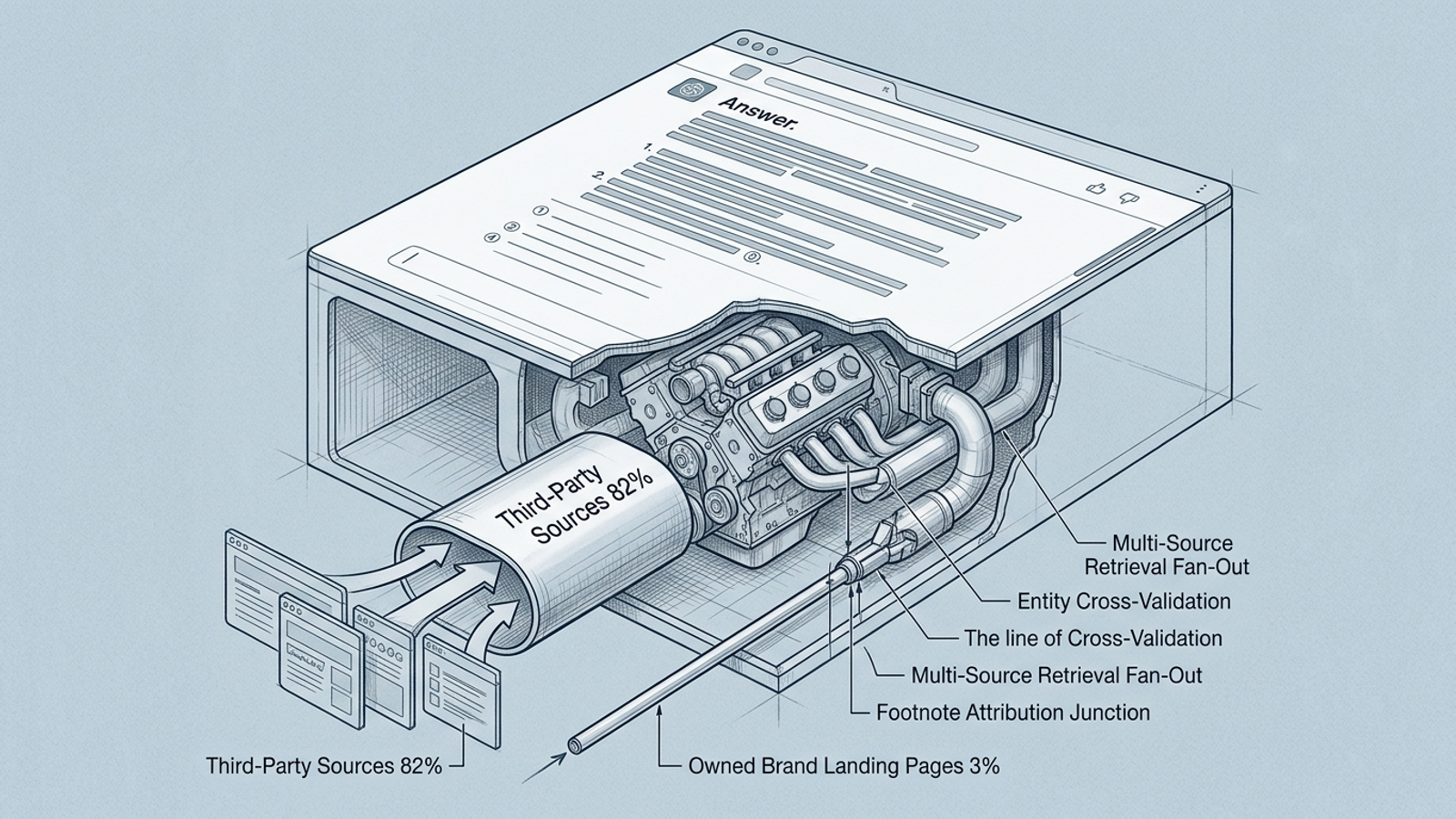
Across 9 million prompts analyzed, roughly 82% of citations on commercial-intent queries went to third-party domains, including review sites, comparison portals, trade publications, and forums. About 3% linked directly to owned brand landing pages. If a rival keeps winning recommendations, more self-published copy alone may miss the mechanism: the sources the engine relies on may not corroborate your claims.
I’d turn the report into one of three jobs:
- The missing page: You have no owned content that addresses the buyer’s constraint. Publish clear pricing, technical specifications, or a direct comparison table in clean semantic HTML.
- The unreadable page: The answer exists, but it’s buried under marketing copy, locked behind complex client-side scripts, or split across tabs. Make the useful information easier to extract.
- The consensus gap: Your page says the right things, but independent sources omit you or describe you unfavorably. Another page on your site will not, by itself, create external agreement.
Name the failure before you assign the fix. Otherwise, a content-gap dashboard becomes a machine for commissioning the wrong content faster.
How many prompts is enough before I trust the number?
Five prompts give you anecdotes, not a measurement program. I’d start with 30 to 50 tightly defined commercial prompts, grouped by intent: feature comparisons, pricing questions, replacement alternatives, and category evaluations. Include prompts about competitors, not just versions that name your brand. Otherwise you’re measuring whether an engine can repeat a name you supplied, not whether it brings that name into a buyer’s decision.
That prompt set gives you coverage. It does not magically give you precision. Repeated runs matter because answers vary; the number of observations matters because a small sample can swing hard. For a meaningful 10-percentage-point visibility shift, the sample-size estimate is roughly 294 answers per comparison window. A weekly view across an intent cluster is more useful than a daily line chart for one prompt, but I still wouldn’t call a five-point Tuesday dip a collapse in brand equity. It could be sampling noise.
Keep coverage and confidence separate. The prompt set tells you which buyer questions you’re watching. Repeated answers tell you how much faith to put in the rate. A competitor control set tells you whether a change is specific to your brand or part of a broader shuffle in what the engine recommends.
When does paying someone to do this beat doing it myself?
DIY monitoring makes sense when you sell one product with clear specifications, face five direct competitors, and have an in-house operator who can protect two hours every Friday to test thirty prompts. That operator can keep the questions grounded in real buyer language and flag changes worth investigating. If the product catalog, markets, or prompt set grows, the labor grows with it.
A standalone dashboard is not automatically the next step. Pure-play monitors can charge $95 to $500 a month to show you where you disappeared, then leave your team with the backlog. A traditional agency can take the same findings, bill a $4,000 monthly retainer, and spend three weeks explaining the red arrows in a slide deck. I’m not against people doing strategic work. I’m against paying for a diagnosis while no one repairs the leak.
That is the distinction behind groas. Rather than handing you an advisory dashboard or billing hours for recurring manual work, groas runs specialized AI models for paid search and organic AI visibility inside business guardrails. The engine works continuously on search terms, product feeds, technical fixes, and structured comparison content; a named senior strategist owns direction and accountability. Actions go into a measurable log with their reasoning. The arrangement is a flat monthly fee, no setup markups, month-to-month terms, and a live trial.
Pay for execution when the work outgrows your team, not for a prettier way to watch it pile up.
How much attributable revenue did our generative citations and search campaigns generate this month?
That is the question I wish founders asked. Instead, I hear, “How high is our AI visibility score?” Visibility belongs in the diagnostic view, like impression share in Google Ads. An 80% impression share means little if the search terms burn budget without creating pipeline. A 70% citation rate means little if the citations appear on broad educational questions that bring in no customers.
Keep measuring mentions, citations, recommendations, and competitor prompts. Then connect what you can to qualified pipeline, closed-won deals, and cost per acquisition. Ask which comparison questions lead prospects to mention your name on sales calls. I want the search terms report, not a trophy screenshot. Everything else is an impression report wearing a new disguise.